
Pike Place Clam Chowder Recipe
Seattle’s Pike Place Market gave us one of the best bowls of creamy goodness you can find.
The Pike Place Clam Chowder Recipe became popular when the market’s small seafood shops started serving it to customers who came for fresh fish.
People loved how smooth and rich it tasted. The bowl warmed them up on cold, rainy days. What does it taste like? Creamy, buttery, with sweet clams and a gentle hint of herbs.
Each spoonful feels comforting. The potatoes melt in your mouth. The bacon adds just the right smoky touch. This chowder is not too thick and not too thin. It’s just perfect.
Today I am sharing this copycat recipe so you can make it at home anytime you want.

The Secret Behind Pike Place’s Creamy Texture
Many people wonder what makes this chowder so smooth and creamy. Using half-and-half and cream together gives you a rich base without making the soup too heavy.
Mixing cornstarch with cold half-and-half before adding it prevents lumps and thickens everything evenly. Cooking the bacon until soft releases more fat that blends into the broth.
Adding both clam juice and clam base builds deep flavor. Simmering everything low and slow helps all the flavors come together.
Some cooks also use an immersion blender on part of the soup for an even smoother texture.
What Type of Potato Is Best for Clam Chowder?
Yukon Gold potatoes work best for this Pike Place Clam Chowder Recipe. They have a buttery, smooth texture that doesn’t fall apart when you cook them.
Russet potatoes are too starchy and can make your chowder gluey. Red potatoes are okay, but they don’t have that soft, creamy feel.
Yukon Golds absorb the clam broth and cream without getting mushy. Always cut your potatoes into small, even cubes so they cook at the same rate.
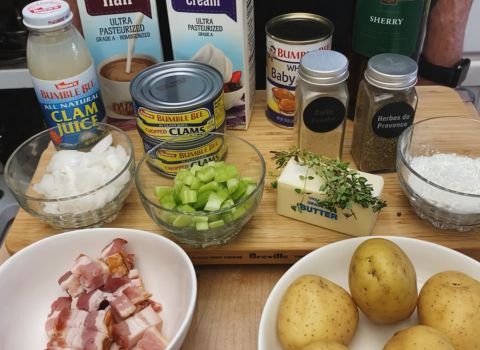
Pike Place Clam Chowder ingredients
- Bacon (3 thick slices, chopped): Gives a smoky taste and makes the base rich. Cook it until soft, not crispy. You can use turkey bacon instead.
- White onion or shallots (½ cup, diced): Onions add a mild sweetness that balances the salty clams. White onions are gentle and don’t overpower the soup. Shallots give a slightly fancier, softer flavor.
- Celery (½ cup, diced): Celery adds a fresh crunch and earthy flavor. It also brings balance to the creamy base. Dice it small so it cooks evenly with the onions.
- Unsalted butter: Butter makes the soup silky and smooth. It also helps cook the onions and celery without burning them. Unsalted butter lets you control the salt level.
- White pepper: White pepper keeps the soup looking clean and white. It adds a gentle, warm spice without dark specks. Black pepper works too, but it changes the look.
- Half and half (1 ¼ cups, divided): This ingredient creates creaminess without making the soup too thick. Part of it goes into the soup early, and the rest mixes with cornstarch to thicken it.
- Cream (1 cup): Cream adds the final layer of richness. It makes the broth smooth and velvety. Add it near the end so it doesn’t curdle.
- Clam base (2 tsp): Clam base is a thick paste that boosts the seafood flavor. It deepens the taste and makes the chowder feel more authentic. You can find it in most grocery stores near the soup section.
- Dry sherry (½ cup): Sherry adds warmth and a subtle sweetness. It rounds out the flavors and makes everything taste blended. Use cooking sherry or drinking sherry—both work.
- Clam juice (8 oz bottle): Clam juice forms the base of the broth. It gives the soup its seafood flavor. One small bottle is usually enough.
- Minced clams (two 6 oz cans): Minced clams are the heart of this recipe. They add texture and a briny, ocean-like flavor. Drain the juice and save it for the broth.
- Baby clams (one can): Baby clams add extra texture. They are small, tender, and full of flavor. They make each bite more interesting.
- Fresh thyme (½ tsp, chopped): Thyme brings a light, herbal note. It adds freshness without overpowering the soup. Fresh thyme tastes better than dried, but dried works in a pinch.
- Granulated garlic (1 tsp): Granulated garlic is simple and flavorful. It blends evenly into the soup. Fresh garlic can burn easily, so granulated is safer.
- Herbes de Provence or dried basil (1 tsp): This herb blend adds an aromatic, earthy flavor. Herbes de Provence includes lavender, thyme, and rosemary. Dried basil gives a sweeter, Italian-style flavor.
- Yukon Gold potatoes (about 1 lb): These potatoes are soft, buttery, and hold their shape well. They add body to the soup and soak up all the flavors.
- Corn starch (3 tbsp): Cornstarch thickens the soup without making it heavy or cloudy. Mix it with half-and-half before adding it to avoid lumps.
- Chopped chives: Chives add color and a mild onion flavor. They make the soup look fresh and finished.
- Bread bowl (optional): Bread bowls are the classic way to serve this chowder. They soak up the soup and add a rustic, hearty touch.
Essential Kitchen Equipment
- Large saucepan or soup pot — for cooking the chowder
- Cutting board and sharp knife — for chopping ingredients
- Wooden spoon — for stirring
- Measuring cups & spoons — for accurate amounts
- Ladle — for serving
- Small bowl — for mixing cornstarch slurry
- Immersion blender (optional) — smooths part of the chowder
How To Make Pike Place Clam Chowder
Step 1 | Cook the Potatoes
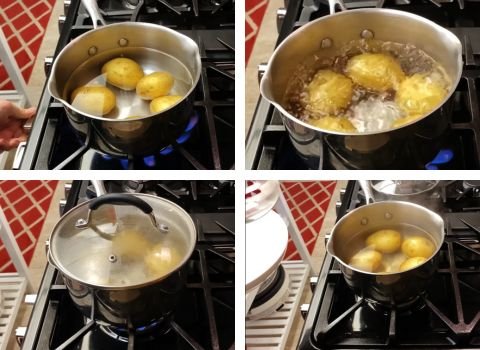
I start by placing my peeled Yukon Gold potatoes in a large saucepan. I cover them with cold water and bring it to a boil.
When it boils, I lower the heat, cover it, and let it simmer for about 10–15 minutes. I check with a fork—they should be soft but not mushy.
Then I drain them, let them cool in the fridge, peel, and dice them into small cubes.
Step 2 | Cook the Bacon
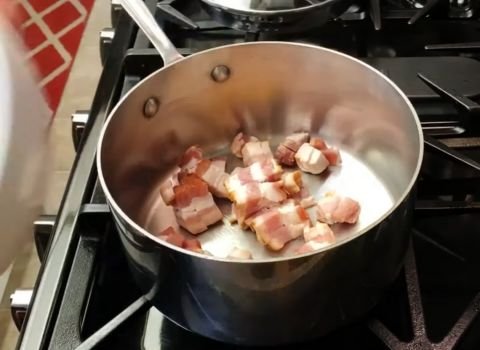
In a large saucepan over medium heat, cook the chopped bacon until it’s cooked through but not crispy.
Once done, remove the bacon and set it aside. Pour off most of the fat but leave about a tablespoon in the pan.
Step 3 | Cook the Vegetables
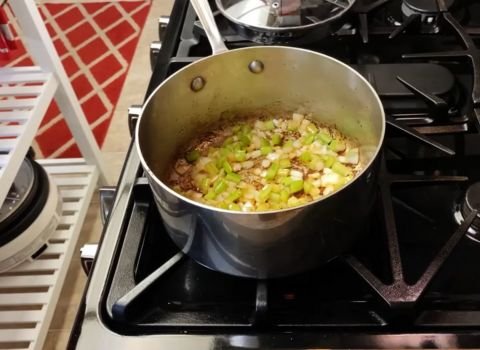
Add butter to the same pan with the bacon fat. Stir in the diced onions (or shallots) and celery. Sprinkle in a pinch of salt and white pepper.
Cook for about 5 minutes until they turn soft and smell amazing.
Step 4 | Build the Broth
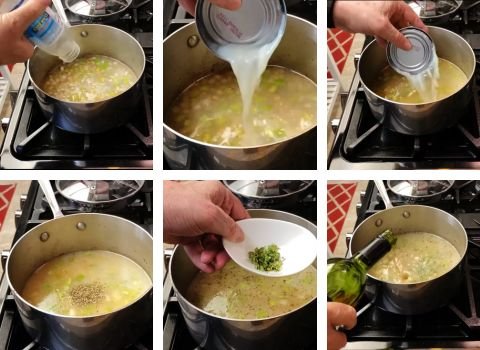
I pour in the bottle of clam juice. I strain the juice from the cans of minced and baby clams and add only the juice for now. The clams will go in later.
Next, I stir in thyme, garlic, herbes de Provence, and sherry. I let it simmer gently for 15–20 minutes. The kitchen smells so good at this point.
Step 5 | Make It Creamy
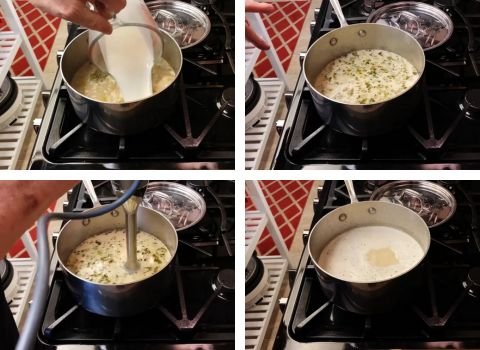
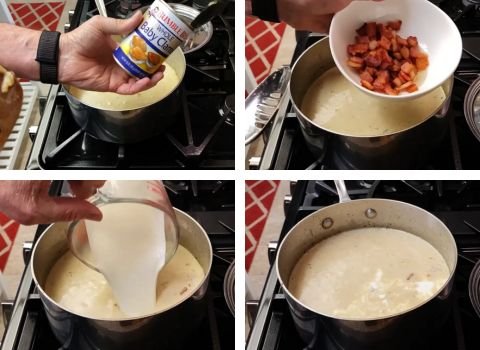
I stir in the clam base and half of the half-and-half. I use my immersion blender here if I want a smooth base. If not, I leave it chunky for a more rustic feel.
Step 6 | Thicken the Soup
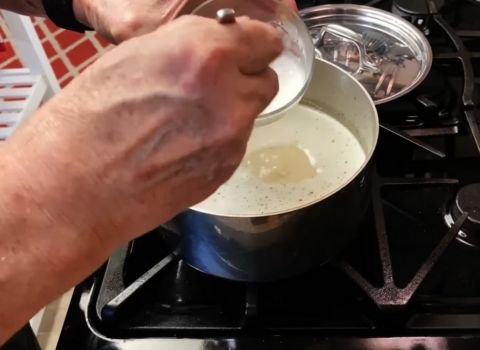
I mix cornstarch with the rest of the half-and-half in a small bowl, then pour it into the simmering soup. I stir slowly until it starts to thicken.
Step 7 | Add the Clams and Cream
Now I add the minced and baby clams, the cooked bacon (saving a little for topping), and the cream. I let everything simmer together for a few minutes.
Step 8 | Add the Potatoes
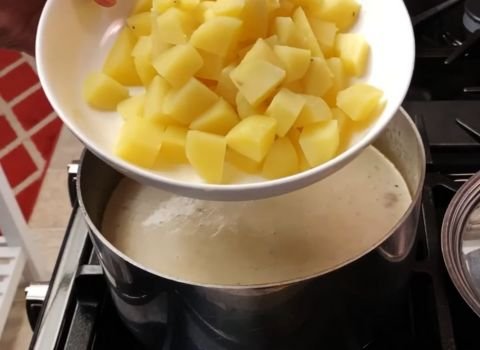
I gently stir in the diced potatoes. I cover the pot and let it cook for another 15–20 minutes on low heat so the flavors blend.
Step 9 | Taste and Finish
I taste the soup and adjust the seasoning. A little white pepper goes a long way. I don’t usually add salt because the clams and bacon give enough flavor.
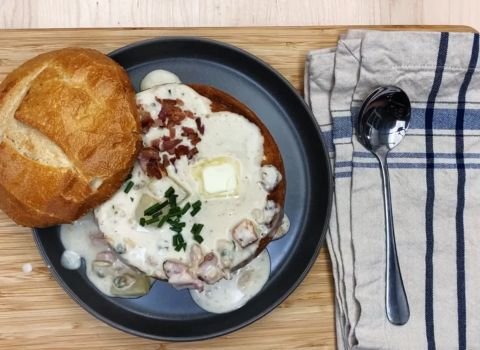
Then I ladle the chowder into a bread bowl or a regular bowl. I top it with bacon bits and chopped chives.
Recipe Perfection Tips
- Cool the Potatoes: Letting the cooked potatoes cool completely before dicing them helps them keep their shape in the chowder. They won’t turn to mush when you stir them in.
- Do Not Boil the Cream: After you add the cream and half-and-half, keep the soup at a gentle simmer. If you let it boil, the dairy might separate, and the texture will be grainy.
- Fresh is Best for Herbs: If you can, use fresh thyme. The flavor is much brighter and more vibrant than dried thyme. It makes a big difference.
- Let it Rest: This chowder tastes even better the next day. If you have time, make it a few hours before you plan to eat it. The flavors will have more time to get to know each other.
How to Serve This Pike Place Clam Chowder
The most famous way to enjoy this chowder is in a bread bowl. The Pike Place restaurant serves it this way, and it is a meal in itself.
You tear off pieces of the bread and dip them into the hot soup. It is so good. If you do not have a bread bowl, a simple bowl with a side of oyster crackers or a crusty baguette is just as wonderful.
A simple green salad with a light vinaigrette on the side helps balance the rich, creamy soup. For a real treat, serve it with a cool glass of dry white wine or a simple apple cider.
Make-Ahead and Storage
1. Make-Ahead: The base (without clams and cream) can be made a day ahead and chilled. Later, add clams and dairy just before serving.
2. How to Store: Leftovers can be stored in an airtight container in the refrigerator for up to 3 days. The flavor becomes stronger the next day, but the potatoes may soften slightly.
3. How to Reheat: Reheat gently on the stovetop over low heat, stirring often. Add a splash of milk or half-and-half to thin it if needed. Avoid boiling — that can separate the cream.
4. Freezing: It’s best to enjoy it fresh, but it can be frozen for up to 1 month. Let it cool fully before freezing in a sealed container. Thaw overnight in the fridge, then reheat slowly.
Pike Place Clam Chowder Recipe FAQs
1. Why is chowder not soup?
Chowder is thicker and creamier than regular soup because it uses dairy products and starch as thickening agents, making it heartier.
Soups are generally thinner and broth-based, while chowder is meant to be rich and filling.
2. What is the best base for clam chowder?
The best base combines clam juice and cream or half-and-half. Clam juice gives natural seafood flavor, while cream adds richness and smooth texture, typical for New England-style chowder like Pike Place’s.
3. How to make chowder thicker without cornstarch?
A roux made from butter and flour can thicken chowder, or mashing some cooked potatoes inside the soup adds natural thickness.
4. My chowder is too thin. What did I do wrong?
The soup might be too thin if the cornstarch was not mixed properly or if the soup was not simmering when you added it. To fix it, make another small slurry.
Mix one tablespoon of cornstarch with two tablespoons of cold water or milk until smooth. Bring your chowder to a simmer and slowly stir in the new slurry. It should thicken up in a minute or two.
5. How can I make this chowder lighter?
To make a lighter version, use milk instead of cream and skip the bacon. You can also add extra celery and carrots for a more vegetable-rich version.
6. What can I use if I don’t have dry sherry?
If you do not have dry sherry, a dry white wine is a good substitute. White vermouth also works well. If you prefer not to use alcohol, you can simply leave it out.
The soup will still be delicious, but you will miss that little depth of flavor the sherry adds.

Pike Place Clam Chowder Recipe
Make this creamy Pike Place Clam Chowder Recipe in 1 hr 20 min. Enjoy the rich, buttery chowder with tender clams and potatoes at home.
Ingredients
- Bacon (3 thick slices, chopped) – smoky, rich; use turkey bacon if preferred
- White onion or shallots (½ cup, diced) – mild sweetness, balances flavors
- Celery (½ cup, diced) – fresh crunch and earthy taste
- Unsalted butter – smooth, silky base
- White pepper – gentle heat, keeps chowder white
- Half and half (1 ¼ cups, divided) – creamy base
- Cream (1 cup) – adds richness, stir in at the end
- Clam base (2 tsp) – deepens clam flavor
- Dry sherry (½ cup) – warmth and subtle sweetness
- Clam juice (8 oz bottle) – broth base
- Minced clams (two 6 oz cans) – primary clam pieces
- Baby clams (one can) – additional texture
- Fresh thyme (½ tsp, chopped) – light herbal note
- Granulated garlic (1 tsp) – simple and flavorful
- Herbes de Provence or dried basil (1 tsp) – aromatic touch
- Yukon Gold potatoes (1 lb, peeled & diced) – soft, buttery
- Corn starch (3 tbsp) – thickener, mix with half-and-half first
- Chopped chives – garnish and color
- Bread bowl (optional) – classic serving style
Instructions
- Place peeled Yukon Gold potatoes in a large saucepan. Cover with cold water, bring to a boil. Lower heat, cover, simmer 10–15 min until fork-tender. Drain, chill, peel (if needed), and dice into cubes.
- Cook chopped bacon in a large saucepan over medium heat until done but not crispy. Remove bacon; leave about 1 tbsp fat in pan.
- Add butter to pan with bacon fat. Stir in onions and celery; season with pinch of salt and white pepper. Cook 5 min until soft.
- Pour in clam juice and juice from canned clams. Stir in thyme, garlic, herbes de Provence, and sherry. Simmer gently 15–20 min.
- Stir in clam base and half of the half-and-half. Use immersion blender for smoother base, if desired.
- Mix cornstarch with remaining half-and-half; stir into simmering soup slowly until thickened.
- Add minced and baby clams, cooked bacon (reserve a bit for topping), and cream. Simmer a few minutes.
- Stir in diced potatoes. Cover, cook low heat 15–20 min for flavors to blend.
- Adjust seasoning with white pepper if needed. Ladle into bowls or bread bowls; garnish with bacon bits and chives.
Nutrition Information:
Serving Size: 1Amount Per Serving: Calories: 350Total Fat: 25gSaturated Fat: 14gCholesterol: 70mgSodium: 950mgCarbohydrates: 20gFiber: 2gSugar: 3gProtein: 12g
This copycat Pike Place Clam Chowder Recipe lets you enjoy a taste of that famous Seattle market in your own kitchen.
The creamy texture and rich flavor come together with simple steps. A warm bowl of this chowder feels like a cozy comfort on any day.