
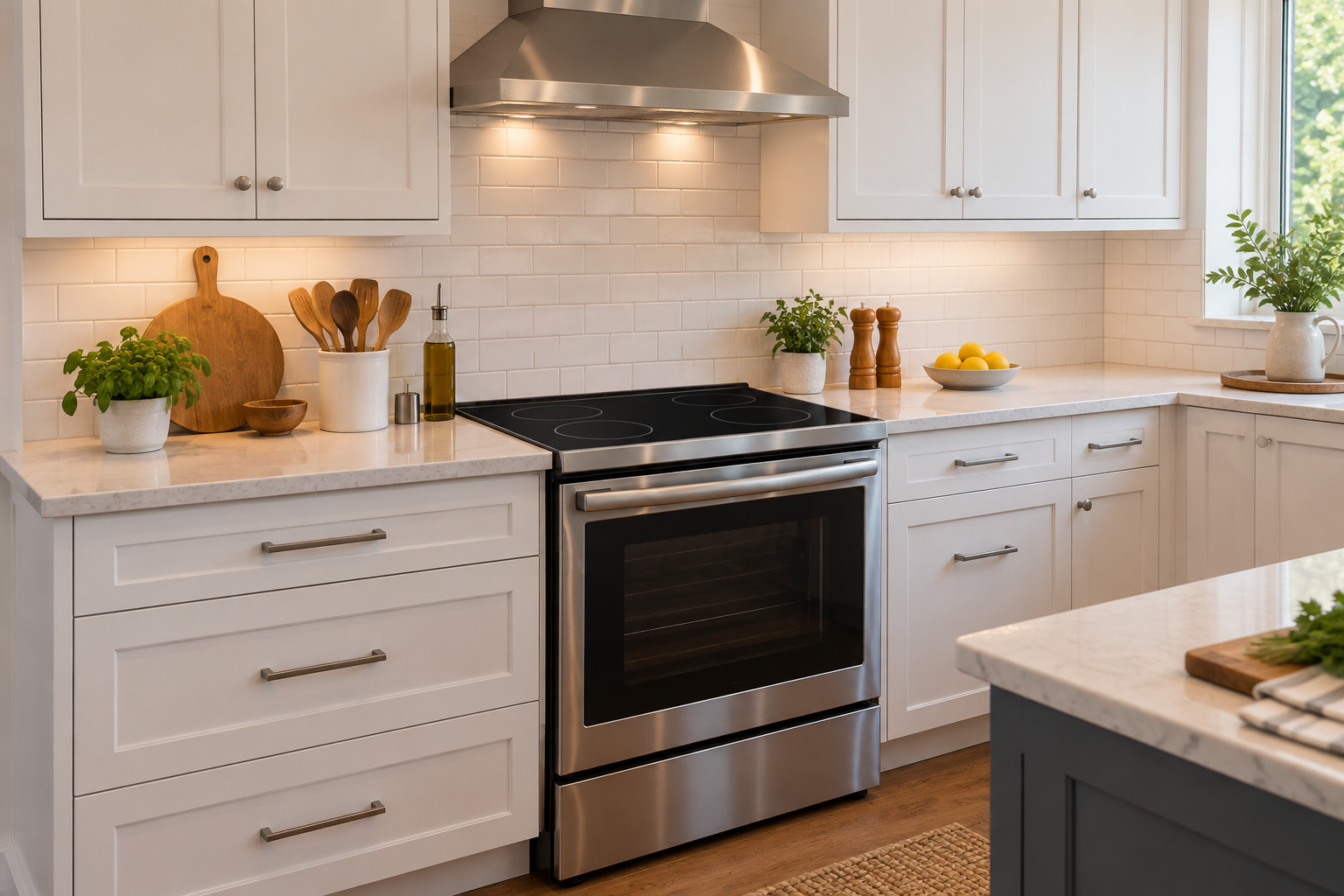
Switching From Gas to a Traditional Electric Range
Switching from gas to a traditional electric range usually means arranging a suitable electrical circuit as well as replacing the appliance. The ordinary 120-volt outlet used by many gas ranges is not a substitute for the higher-voltage supply a full-size electric range needs. Choose the exact range, have its installation requirements checked, and assign the gas disconnection before booking delivery.
This guide covers coil and radiant electric ranges, not induction. A range combines a cooktop and oven; replacing a separate gas cooktop is a different cabinet project.
What does “traditional electric” mean?
A conventional electric cooking surface heats a resistance element. The element may be an exposed coil or sit beneath a smooth glass surface. Induction also uses electricity, but heats compatible cookware through a magnetic field. Our gas-to-induction guide covers that alternative.
With radiant or coil cooking, allow for heat remaining after you lower the setting or turn the element off. Check your new range’s cooking and cleaning instructions, especially for a glass surface. Do not assume familiar knob positions will give the same cooking result as the old gas burner.
Settle the installation before choosing a delivery date
Start with the model number and installation manual, then ask for one written scope covering the following:
- Whether the existing electrical supply can serve this particular range.
- Any new circuit, panel work, permit or inspection needed.
- Who will disconnect the gas range and safely cap or retire the gas connection.
- Whether the opening, overhead clearance, floor and delivery route work.
- Who supplies the correct cord and completes final installation, including the anti-tip restraint.
Whirlpool’s gas-to-electric planning guide highlights the wiring route and gas work as separate parts of the conversion. A delivery appointment does not establish that either is included. Ask the retailer what its installer will and will not do.
Electrical guidance from Lavender Electric LLC
Lavender Electric LLC is the electrical expert contributor to My Recipes Haven’s kitchen-planning program. The Washington electrical contractor serves the Seattle area, Eastside and Snoqualmie Valley. Its residential kitchen work includes appliance circuits and receptacle upgrades. The questions below organize the electrical assessment; the linked manufacturer documents establish their own product requirements.
Can the new range use the gas range’s outlet?
Usually not. A typical full-size conventional electric range needs a supply such as 120/240 volts or an approved 120/208-volt arrangement, not just the ordinary 120-volt connection serving many gas models. As one concrete example, Hotpoint lists 208/240 volts and 40 amps for its RBS160DMBB electric range. That specification is not a sizing rule for every range.
Have the electrician identify what is actually installed. A previous owner may have left an unused electric-range circuit, but its presence does not prove it is suitable or safe to reuse.
Does every electric range need a 50-amp breaker?
No. Use the selected appliance’s requirements and an assessment of the complete circuit. Do not buy a breaker from a generic “electric stove” rule or increase the breaker size to match a new appliance without checking the wiring and equipment it protects.
GE’s GRS500PVSS installation instructions illustrate why the manual matters: they specify an individual grounded branch circuit and distinguish cord and connection arrangements. Another model may differ. Give the installer the complete manual, not a screenshot of a retailer’s feature list.
Will I need a new electrical panel?
Not automatically. The assessment should establish capacity for the added load, an appropriate circuit arrangement and a workable wiring route. Ask the electrician to explain what finding requires each proposed upgrade. Available breaker spaces alone do not establish that the home has enough capacity.
If the quote includes opening walls or ceilings, clarify who restores those surfaces. Electrical installation and drywall finishing may be separate services.
What if an old three-prong range outlet is already there?
Treat it as a compatibility question, not permission to order a matching cord. Existing three-wire installations and new four-wire installations have different grounding considerations. The appliance instructions, actual conductors, condition and locally applicable rules need review. Our existing range outlet guide explains what information to gather without opening electrical equipment.
Ask about required GFCI and any applicable AFCI protection as part of that review. Do not assume either the newest national code edition or an old installation’s rules automatically describe your project.
Keep ventilation and usable space in the plan
An electric range removes the gas flame, but cooking still produces emissions. The Washington State Department of Health recommends exhaust ventilation while cooking. Check the new range and hood instructions together.
Measure with the oven door open, and check adjacent drawers and walkways. If the remodel also adds hidden countertop-appliance storage, coordinate it with the appliance garage plan rather than giving away all the landing space beside the range.
What should you buy now—and what can wait?
Select the range and obtain an installation scope first. Let the installer specify the cord and installation accessories; a “universal” label is not a substitute for compatibility. Compare cookware against the chosen surface’s instructions before replacing your entire set.
If you are still choosing the cooking technology, use our induction, gas and electric comparison before committing to utility changes. The useful comparison is the complete installed project, not just the appliance price.
Electrical codes, manufacturer requirements and local rules can change or vary by jurisdiction. Verify current requirements and manufacturer instructions and consult a qualified electrician before electrical changes.
Some images on this page were created with AI for illustrative purposes.




One Comment